Sunday, October 6, 2013


XMEN


Storm


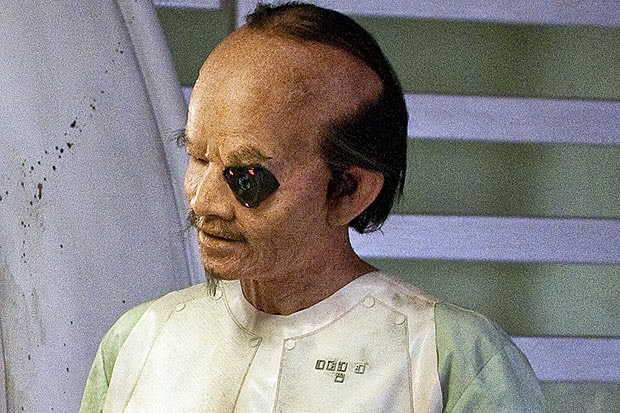
Cloud Atlas


Halle Berry


Born: 08/14/1966
Birth Place: Cleveland, Ohio, USA

Born on Aug. 14, 1966 in Cleveland, OH, Berry was raised by her African-American father, Jerome, a hospital attendant in the psychiatric ward, and her Caucasian mother, Judith, a psychiatric nurse. After her parents divorced when she was four, Berry grew up largely estranged from her absentee father, though he did return to the fold briefly in 1976. At Bedford High School, she was involved in many facets of student life, including cheerleading, editing the school newspaper and serving as president of the honor society. Berry was also elected prom queen, though some of her classmates - who were predominantly white - accused her of stuffing the ballot. A coin toss rectified the problem and Berry remained prom queen. She would later talk of her biracial background as painful and confusing throughout her youth, but that she made the decision early on to live life as a black woman because she knew that was how she would be perceived. After graduating in 1984, she won the Miss Teen Ohio Pageant and represented the state at the Miss Teen All-American Pageant. An overachiever since she was a child, Berry attempted to add another crown to her arsenal as Miss Ohio in the Miss USA competition, but unfortunately was named first runner-up instead. After finishing in the top five at the Miss World pageant, she moved into modeling, working first in the Chicago area and later in New York City.Though she sought to continue her education by enrolling in Cuyahoga Community College, where she began studying broadcast journalism, Berry dropped out of school to pursue an acting career. In 1989, Berry hit pay dirt early on when she landed a regular role as a teenage model on the sitcom "Living Dolls" (ABC, 1989), but the show lasted a mere 12 episodes before getting canceled. Her subsequent guest work in other comedy series like "A Different World" (NBC, 1987-1993) followed before she was able to convince Spike Lee she could handle the demanding role of a crack addict in his racially complicated romantic drama, "Jungle Fever" (1991). Delivering a harrowing performance alongside then unknown Samuel L. Jackson, Berry proved that she was much more than a pretty face. But finding roles that challenged her considerable abilities was more of a challenge, as casting agents rarely considered her for meaty roles, due to her undeniable beauty. She was cast as a femme fatale in "Strictly Business" (1991) and Damon Wayans' stripper girlfriend in "The Last Boy Scout" (1991) before portraying a career woman who falls for Eddie Murphy in "Boomerang" (1992). Berry had better luck playing a headstrong post-Civil War woman in the titular role of "Queen," a CBS miniseries, based on Alex Haley's book about his grandmother's experiences.Berry a landed the role of a sultry secretary in the live-action comedy "The Flintstones" (1994), winning the part after Sharon Stone turned it down. As a former drug addict struggling to regain custody of her son in "Losing Isaiah" (1995), Berry showed she could handle more serious fare, holding her own opposite powerhouse co-star Jessica Lange. Her hard-as-nails flight attendant was one of the few high points in the otherwise run-of-the-mill action thriller, "Executive Decision" (1996), a role that previously would have been given to Caucasian actresses. She once again broke through racial barriers as the spouse who finds herself framed for murder in "The Rich Man's Wife" (1996). Also that year, Berry's personal life took a surprisingly depressing turn when her marriage to former major league baseball player David Justice ended in divorce in 1997. So distraught over the break-up, which was spurred by their inability to be in one place together, Berry was prompted to take her own life, which she stated in a 2002 interview with The Telegraph. Back on screen, she seemed miscast in the lead of the television miniseries "The Wedding" (ABC, 1998), which was set in the upper-middle class black milieu of Martha's Vineyard in the 1950s, but She fared better as an intelligent woman raised by activists who gives an older, slightly insane politician (Warren Beatty) a new lease on life in "Bulworth" (1998). She formed a close relationship with Beatty, who took her under his wing and gave her the confidence she needed to continue to be taken seriously as an actress. She next delivered as good performance as the singer Zola Taylor, one of the three wives of pop singer Frankie Lymon (Larenz Tate), in the unfortunately overlooked biopic, "Why Do Fools Fall in Love?" (1998). In 1999, Berry was able to realize her life-long dream of portraying the singer-actress who broke racial barriers by becoming the first black woman nominated for a Best Actress Academy Award in the HBO biopic "Introducing Dorothy Dandridge." Although both Janet Jackson and Whitney Houston had expressed a desire to play Dandridge, Berry managed to secure the role. Not only did she deliver a career-defining performance that netted her several awards, including an Emmy, but she also enhanced her Hollywood stature by serving as one the producers on the project.The following year, Berry took sci-fi fans by Storm, so to speak, when she was cast as the beautiful mutant able to control the forces of nature in Bryan Singer's big screen version of the Marvel comic, "X-Men" (2000). Her success with the budding franchise was overshadowed when she was involved in a car accident on Sunset Boulevard with second husband, singer Eric Benet, and left the scene to go to the hospital for treatment, leading to a flurry of stories in the tabloid media. The actress pleaded no contest for leaving the scene of an accident and settled a civil lawsuit with the other vehicle's occupant out of court. In 2001, Berry was reduced to being nothing more than a decoration in the unspectacular John Travolta/Hugh Jackman thriller, "Swordfish," a fact made all the more clear when she appeared topless for the first time in her career. The gratuitous scene did little for the film's plot, but did manage to generate buzz, including unfounded rumors that she received a $500,000 bonus to do the scene. Later that year, she delivered a brutally honest and moving performance as a struggling waitress coping with a husband on death row and an overweight child in "Monster's Ball" (2001). Downplaying her looks and tearing into a rare challenging dramatic role, Berry earned critical plaudits for her work, which included a graphic, three minute-long love scene with co-star, Billy Bob Thornton.Her performance in "Monster's Ball" generated substantial buzz and yielded some prizes from groups like the National Board of Review and the Screen Actors Guild. But most importantly, she made cinematic history by becoming the first black woman ever to earn an Academy Award for Best Actress. In her tearful acceptance speech, Berry said "This moment is so much bigger than me. This moment is for Dorothy Dandridge, Lena Horne, Diahann Carroll. It's for the women that stand beside me and for every nameless, faceless woman of color that now has a chance because this door, tonight, has been opened." Enjoying her newfound prominence in the industry, Berry accepted the role of Jinx in the 20th James Bond feature, "Die Another Day" (2002) opposite Pierce Brosnan's 007. As the first A-list, Oscar-winning Bond girl in a generation, Berry was trumpeted in the role from the moment she began filming to the day the movie was released. She even gamely paid homage to the series' roots by appearing in a provocative tangerine bikini reminiscent of Ursula Andress' in "Dr. No" (1963). While her performance was not exactly Oscar bait, she did display a strong chemistry with Brosnan as his equal in both espionage and in bed, inspiring the studio to plan a spin-off with her character. The project, however, languished for years in development purgatory.Berry next segued to "X2" (2003), the sequel to "X-Men" in which she reprised her role as Storm, a part that was expanded to suit her award-winning status and with a more becoming hairstyle. Nevertheless, rumors of friction between her and director Bryan Singer circulated, while Berry failed to participate in the massive press push for the blockbuster, putting her role in future sequels in question. Later that year, she starred in the horror thriller "Gothika" (2003), playing Miranda Gray, a doctor in a mental institute who becomes incarcerated in her own hospital after seemingly becoming possessed and murdering her husband. Berry provided a convincing and relatable presence in the stylish, but otherwise clichéd film. Meanwhile, she weathered another public split with a spouse, this time with Eric Benet. The split was in large part blamed on his alleged sex addiction and serial infidelity, with the heartbroken Berry publicly vowing to Oprah Winfrey never to marry again. Back on screen, she suffered further humiliation when she took on the role of Batman's popular comic book villainess/paramour "Catwoman" (2004). Berry portrayed the shy Patience Phillips, a repressed woman whose death grants her feline powers from a mystical cat in order to avenge herself. Although Berry's spectacular body, showcased in flesh-friendly skintight leather outfits, and her appropriately cat-like attitude as the whip-wielding Catwoman were appreciated, the film was otherwise a dismal loser all around, including Berry's inauthentic portrayal of meek Patience. So bad was the film and so unexpected was the Oscar winner's laugh-inducing performance, she was presented with a Golden Raspberry Award for Worst Actress. Showing she had a sense of humor, Berry proudly accepted.Berry returned to television when she appeared in the Oprah Winfrey-produced telepic, "Their Eyes Were Watching God" (ABC, 2005). In this adaptation of the popular Zora Neale Hurston novel, Berry played Janie Crawford, an iconoclastic, free-spirited woman whose unconventional mores regarding relationships upset her 1920s contemporaries in her small community. For her work in benefactor Winfrey's film, Berry received an Emmy Award nomination for Outstanding Lead Actress in a Miniseries or Movie. Meanwhile, she lent her voice to Cappy, one of the many mechanical beings to inhabit the animated feature "Robots" (2005). She next revived Storm for the third installment of the series, "X-Men: The Last Stand" (2006), this time directed less successfully by Brett Ratner. She followed by starring in the slick crime thriller "Perfect Stranger" (2007), playing an investigative reporter who poses as a temp at an advertising agency in order to unravel the murder of a friend connected to a powerful ad executive (Bruce Willis). That same year, Berry starred in the dark character drama, "Things We Lost in the Fire" (2007), in which she played a woman grieving over the loss of her husband (David Duchovny) who lets his best friend (Benicio Del Toro), a heroin addict, move into the family's home in order to get both of their lives back on track. In 2008, Berry's typically stormy personal life took a happy turn when she gave birth to her daughter, Nahla, whom she had with the equally gorgeous model Gabriel Aubry.With the exception of hosting the historical documentary "For Love of Liberty: The Story of America's Black Patriots" (PBS, 2010), Berry remained, for the most part, out of the public eye and out of theaters while enjoying motherhood. That changed in a very big way when the actress reemerged as the star of the psychological drama "Frankie & Alice" (2010). As a young woman suffering from a scarred past and multiple personality disorder, Berry's virtuoso performance alongside actor Stellan Skarsgård earned her a Golden Globe nomination for Best Performance by an Actress in a Drama nearly a full week before the film officially opened. In stark contrast to the acclaim she was receiving for her work in "Frankie & Alice," was yet another well-documented romantic failure when she and Aubry announced their separation. Despite assertions that they would put their daughter's happiness first, Berry and her ex-boyfriend were destined for a lengthy custody battle after Aubry formally asked a Los Angeles court to recognize his paternity and grant him shared custody of the then two-year-old Nahla. Those predictions were confirmed after Berry immediately responded by informing the courts that she had serious concerns for her daughter's well-being if the child were to be left alone in Aubry's care for any extended period of time.Tensions and accusations between Berry and Aubry escalated as the actress began dating handsome French actor Olivier Martinez in the spring of 2010 after the pair met on the set of her latest film. Despite time spent overseas with her new boyfriend and daughter, in April 2011 Berry announced that her custody issues with Aubry had been amicably resolved. At the end of the year, the actress was back in theaters as part of the all-star ensemble cast of the romantic comedy "New Year's Eve" (2011), the holiday-themed sequel to director Garry Marshall's 2010 box office hit, "Valentine's Day." Although the film failed to live up to the success of its predecessor, the actress' personal life continued to make news when, after months of speculation, Martinez confirmed his engagement to Berry in March 2012. Filmed in 2010, Berry's long-delayed "Dark Tide" (2012), the aquatic-thriller starring Berry as a troubled shark expert on a dangerous mission, was released with little fanfare on DVD, most notable for being the film on which she met her new fiancé.The earlier truce with Aubry soon crumbled, however, after Berry announced her intention to move to Paris with Nahla and live with Martinez. The actress cited various reasons for the potential cross-continent move, including reported death threats made by a longtime stalker, continued harassment by paparazzi outside her home and Nahla's school, and Berry's ongoing concern for her daughter's safety during visits with her father. After being taken to Dependency Court by L.A. Child Protective Services, Aubry was questioned about his personal behavior and his ability to safely care for Nahla. He countered by asking for $20,000 a month in child support from Berry, though his position was dealt a blow when a court-ordered custody evaluation declared that Berry was the parent better suited to providing a safe environment for their daughter. Meanwhile, Berry was given her own blow when her request to move overseas was denied by the courts in early November 2012.The setback lead to physical violence on Thanksgiving Day less than two weeks later, when Martinez and Aubry were involved in an altercation at Berry's home. Aubry appeared to have received the worst of it as Martinez repeatedly punched and kicked him in Berry's driveway after the father had dropped off his daughter for Thanksgiving dinner. Martinez placed Aubry under citizen's arrest and quickly received an emergency protective order that prevented him from coming within 100 yards of Berry and Nahla. After Aubry was taken into custody, he was granted his own restraining order against Martinez. In his filing, Aubry stated that Martinez threatened to kill him and included photos of him with numerous cuts and bruises on his face. The temporary order against Aubry was lifted on November 27, and he was set to appear in court later in December to hear whether or not a judge would grant his three-year order against Martinez. All the drama did not serve Berry well, as even her longtime fans questioned her motives for wanting her daughter's father removed from her life.


2014 XMEN DAYS OF FUTURE PAST

Saturday, October 5, 2013


Wesley Snipes Producer

Documentarian St. Claire Bourne takes a close-up look at author and historian John Henrik Clarke, who, on camera for much of the film, bounces back and forth between a description of his own personal history, and his views on the history of Africa and of Pan-Africanism. His points are backed up by old newsreel footage, and by images of artwork depicting Africans and their civilization over the centuries. Actor Wesley Snipes executive produced the film and serves as a narrator. John Henrik Clarke: A Great and Mighty Walk was made in 1996, with Clarke suffering from glaucoma, barely able to see as he gives his sweeping account. He talks about his own upbringing, and his growing interest in Pan-Africanism, the failures of the civil rights movement and the Black Power movement, his close friendship with Malcolm X, and his critical assessment of Louis Farrakhan's Million Man March. He also gives a primer on the history of African civilization, and argues that no conquering or colonizing power ever "brought civilization" to Africa, but rather these nations destroyed what civilization they didn't understand, and brought many of Africa's ideas back to their bases in ancient Greece and Rome. He also describes how Black Africans were methodically removed from the history of the civilization of the Nile. He details how leaders like Marcus Garvey, W.E.B. Du Bois, and Ghanaian Kwame Nkrumah spread the ideas of Pan-Africanism throughout the U.S. and the world. John Henrik Clarke: A Great and Mighty Walk was shown at the 1997 Sundance Film Festival, and won the Best Documentary award at the 1997 UrbanWorld Film Festival. Clarke died of a heart attack in 1998. ~ Josh Ralske, Rovi


Wesley Snipes


Born: 07/31/1962
Birth Place: Orlando, Florida, USA

Born Wesley Trent Snipes in Orlando, FL, on July 31, 1962, he was raised in the Bronx and discovered his calling as an actor at an early age, attending New York's High School of Performing Arts from 1975-1977. His parents' divorce forced him to return to Florida, where he graduated from Orlando's Jones High School in 1980, after much involvement in the school's drama department. After school, Snipes persevered, finding acting work in regional Orlando productions and dinner theater; he also co-founded a street theater group called Struttin' Stuff. Eventually, he made his way back to New York as a student at SUNY Purchase, where he graduated with a Bachelor of Fine Arts degree in 1985. Snipes soon found work in television commercials, as well as on the Broadway stage, where he made his debut in 1985's "The Boys of Winter." That same year, he married April Snipes, with whom he had a son, Jelani, in 1988. The marriage ended five years later with a 1990 divorce.A chance encounter with a casting agent at a talent competition led to broader exposure, and after a handful of roles on television series, he made his feature film debut as a high school football player in the limp Goldie Hawn comedy "Wildcats" (1986). Among his co-stars in the film was another aspiring young actor named Woody Harrelson, with whom Snipes would be paired in several future projects and become a close friend with. More supporting roles in features and television followed, but the most significant credit during this period was one that many viewers actually did not see. Director Martin Scorsese cast Snipes as the rival gang leader opposite Michael Jackson in the pop legend's acclaimed video for the song "Bad," in 1987, but Snipes was only featured in the extended version of the video. One who did see Snipes' performance was Spike Lee, who was sufficiently impressed with the actor's dynamic presence to offer him a role in his new feature, "Do the Right Thing" (1989). However, Snipes passed on the role in favor of a substantial part as a flashy and supernaturally fast center fielder in the hit baseball comedy "Major League" (1989). The exposure of that film, as well as a Cable Ace Award for an episode of "Vietnam War Story" (HBO, 1987-88), helped to propel Snipes toward a wider spectrum of exposure and popularity.After a brief stint as a series lead in the ABC police drama "H.E.L.P." (1990), Snipes launched into a string of critical and box office hits that helped to solidify him as one of the most dependable and versatile actors of the early 1990s. He was all action as a narcotics cop determined to bring down drug kingpin Christopher Walken at all costs in Abel Ferrara's ultra-gritty "King of New York" (1990), then shifted gears to play a jazz saxophonist who outshines his band leader (Denzel Washington) in playing and romance in Spike Lee's "Mo' Better Blues." Snipes exhibited even deeper dramatic chops as a successful black architect whose relationship with a white secretary (Annabella Sciorra) stirs up a whirlwind of turmoil with friends and family in Lee's "Jungle Fever" (1991). But the film that truly put Snipes on the map was Mario Van Peebles' exceptional crime drama "New Jack City" (1991). Snipes played Nino Brown, an enterprising and ruthless drug lord (patterned after real-life masterminds Nicky Barnes and the YBI crew) whose rise to the top of the Big Apple crack cocaine game is undone by his own lust for power and control. A massive hit with a wide range of moviegoers, the film earned Snipes an Image Award for Outstanding Lead Actor."Passenger 57" (1992) helped to mint Snipes as a credible action hero and leading man for all races in big-budget Hollywood productions. The slick thriller, about an ex-police officer (Snipes) tangling with international terrorists aboard an airline, benefited greatly from Snipes' two decades of training in martial arts, which he began studying as a self-described late blooming teen in the Bronx. Snipes followed this with another box office hit in Ron Shelton's "White Men Can't Jump" (1992), an exceptionally likable comedy about a biracial team of basketball hustlers that included some sharp commentary about racial stereotyping. Audiences responded overwhelmingly to the chemistry between Snipes and Harrelson, though their third film together, the crime comedy-drama "Money Train" (1995), failed to repeat the success of its predecessor.Snipes scored a third hit - albeit on a much more modest scale - with "The Waterdance" (1992), Neil Jimenez's affecting drama about a writer who recovers after a paralyzing accident in a paraplegic rehabilitation center. Snipes was extremely affective as one of the center's longtime patients whose boastful personality hides a deep-seated loneliness and fear of rejection. For his performance, Snipes was nominated for a 1993 Independent Spirit Award. By now, Snipes was reaping the full rewards of Hollywood stardom; he had been named one of the "12 Most Promising New Actors" by Screen World magazine, and People counted him among the "Most Beautiful People in the World" in 1991. The latter fact was not lost on some of the most attractive female actresses in Hollywood, and Snipes was seen in the company of Halle Berry (his "Jungle Fever" co-star), Jennifer Lopez, and Jada Pinkett, among others.He returned to Hollywood moviemaking with two sizable hits in 1993, both of which traded on his action hero skills; "Rising Sun," based on the novel by Michael Crichton, was a formulaic thriller about murders at a Japanese company, but benefited from the prickly on-screen relationship between Snipes and Sean Connery as a former police captain with insight into the Japanese mindset. Snipes then went over the top as a megalomaniacal super villain who escapes cryogenic prison to wreak havoc in a sterilized 21st century Los Angeles in "Demolition Man" (1993). Ostensibly a vehicle for the top-billed Sylvester Stallone, Snipes' gleefully wicked performance easily outshone the aging action hero, and earned him a 1994 MTV Movie Award for Best Villain. He then rounded out the year with a lackluster police drama called "Boiling Point" (1993), which failed to take advantage of its star or the recently revitalized Dennis Hopper as its flashy antagonist. That year also marked the first of Snipes' numerous run-ins with the law when he was fined $1,000 and given a two-year unsupervised probation for carrying an unconcealed firearm.The year 1994 saw a downturn in Snipes' fortunes at the box office, though from a financial standpoint, he was still on top of the world. The actor netted a $7 million payday to star in "Drop Zone" (1994), a mediocre action-thriller about a U.S. Marshal (Snipes) who seeks revenge for the murder of his brother by an ex-DEA agent (Gary Busey) who uses skydivers to hijack a plane. Snipes later appeared to echo his "New Jack City" success as a urban drug lord in the moody drama "Sugar Hill" (1994), but the movie failed to connect with a wide audience. The year also found the actor back in the news after Snipes was charged for reckless driving after leading Florida police on a 30-mile highway pursuit. He was later required to perform 80 hours of community service.Snipes made a bold career move in 1995 by playing a drag queen in the comedy "To Wong Foo, Thanks For Everything! Julie Newmar," which earned modest box office returns and a cult following, particularly among gay fans. Snipes, however, was reportedly unhappy with the end result and turned down several requests for a sequel. He returned to the action vein for the lackluster "Money Train," then made an impression with an uncredited cameo in "Waiting To Exhale" as a suave bar patron who attempts to pick up Angela Basset. Snipes then moved to television with an Image Award-winning turn as a principal who struggles to reconcile his own ambitions for his school with the creative drive of a student who has painted a portrait of Jesus as a black man in "America's Dream" (1997). Snipes also lent his voice to The Pied Piper in a 1997 episode of the multicultural animated series "Happily Ever After: Fairy Tales for Every Child" (HBO, 1995-2000).Snipes' work in features had varying results as the 1990s drew to a close. He was a baseball player who finds himself the target of an obsessive admirer (Robert De Niro) in the dreary thriller "The Fan" (1996), and a police detective investigating a homicide with political connections in "Murder at 1600" (1997). Both performed moderately well, but not at the levels achieved by his previous hits. Snipes also gave a critically acclaimed performance in "One Night Stand" (1997), a drama about a successful television director (Snipes) who puts his marriage into turmoil after an indiscretion with a stranger (Nastassia Kinski). Snipes took home the Volpi Cup from the Venice Film Festival for his performance, but the film enjoyed a very limited theatrical release.But Snipes bounced back in a major way with "Blade" (1998), an action-horror-thriller based on the popular Marvel Comics title. Snipes also produced and choreographed the fight sequences in this high-energy story of a half-vampire (Snipes) who learns to resist his inhuman urges in order to fight the undead. Snipes' extreme athleticism was a perfect match for the role, and the film grossed over $150 million at the box office. He followed "Blade" with what should have been another slam dunk - "U.S. Marshals" (1998), the sequel to the wildly successful "The Fugitive" (1993), and co-starring Tommy Lee Jones in a reprise of his Oscar-winning role as Sam Gerard - but the film failed to meet critics' approval. Its lackluster box office return seemed of little consequence to Snipes, who was once again riding high in Hollywood, and even received his star on the Walk of Fame in 1998 and an honorary doctorate from his alma mater at SUNY Purchase.Snipes began to explore options behind the camera starting in 1996; through his company, Black Dot Media, he served as executive producer and narrator of the documentary "John Henrik Clarke: A Long and Mighty Walk," about the acclaimed author, historian, and civil rights activist. Snipes later served as executive producer on projects as varied as "Down in the Delta," a 1998 TV drama directed by Maya Angelou (in which he also co-starred), and "The Big Hit" (1998), a perversely eccentric action-comedy about professional killers with Mark Walhberg. Snipes also produced the highly rated "Futuresport" (1998), a sci-fi/action project for ABC, and presented the documentary "Masters of the Martial Arts" (1998), which focused on the foremost cinematic practitioners, including Jackie Chan.Snipes also began developing a security firm that would provide trained bodyguards for high-profile clients; the company - called The Royal Guard of Amen-Ra - was launched in 1998, but found itself in hot water two years later when an investigation was launched into its connection to an extremist religious cult. Snipes' company sought to buy property in Georgia from the cult, though the sale was cancelled after the investigation was launched. The business deal was not the only aspect of Snipes' life that had gone sour by the late 1990s; his strategy of switching from high-energy action films to smaller dramas ran out of gas with 2000's "The Art of War," about a UN security official who finds himself the target of a massive conspiracy involving the U.S. government and Triad gangsters. The film, which Snipes also co-produced, was dismissed as ludicrous, despite Snipes' trademark brand of martial arts action. Its follow-up, a modest thriller called "Liberty Stands Still" (2001), was ignored in its fall release by the massive coverage of the September 11th attacks. "Disappearing Acts," a 2000 romantic drama about a construction worker (Snipes) who falls for a teacher (Sanaa Lathan), performed moderately well (thanks to its source material by Terry McMillan), but Snipes did not enjoy another substantial hit until 2002's "Blade II," which brought critical favorite Guillermo Del Toro on board as director. Reviewers were less than kind to the sequel, but audiences turned out in droves and made it the most popular of the film trilogy.By the new millennium, Snipes was earning more headlines for his personal life than for his movie output. In 2002, he was the subject of a scandalous paternity suit that alleged he had fathered a child with an Indiana woman after they had intercourse in a crack den in 2000; the suit was dismissed when the biological father was located, but the allegations helped to briefly soil Snipes' character. The following year, the smears got even worse when R&B singer Christopher Williams publicly accused Snipes of abusing Halle Berry during their brief relationship in an attempt to defend allegations that he had inflicted injury on the Oscar-winning actress - an injury that resulted in Berry losing hearing in on ear. In 2003, Snipes married South Korean painter Nakyung Park, with whom he had four children. The marriage ended sometime prior to 2007.Unfortunately, Snipes' fortunes did not halt their rapid decline as the decade wore on. He was arrested in the Johannesburg Airport for attempting to leave the country with a forged South African passport. He was later allowed to exit the country with his valid U.S. passport, but authorities reduced his immigration status to disagreeable. His film career also continued to falter, with only "Blade: Trinity" (2005) achieving any sort of box office return, though much less than the previous two entries. The film's success, however, was dampened by a lawsuit filed by Snipes against New Line Cinema and director David S. Goyer for allegedly failing to pay his full salary, refusing to include him in casting decisions (Snipes once again served as producer of the film), and reducing his screen time in favor of newer characters played by Ryan Reynolds and Jessica Biel. The press later reported that Snipes had allegedly made death threats against Goyer and acted in an uncooperative manner on set, though none of this was substantiated in the suit, which went unresolved for several years.The most devastating blow to Snipes' fortunes began that same year when Snipes defaulted on paying his property taxes in California, which totaled over $171,000. This was followed by a 2006 conspiracy charge, which alleged that Snipes and his associates had sought to defraud the U.S. government by filing a false tax payment and sending fraudulent tax payments to the Internal Revenue Service. Snipes was also charged with failing to pay taxes from 1996 through 2004. The actor responded by declaring himself a non-resident alien - which was incorrect, as he was a U.S. born citizen - and that he was a target by prosecutors, as well as the racial prejudices of the town of Ocala, FL, where his trial was to take place. In 2007, it was discovered that Snipes had failed to pay taxes on a home in Alpine, NJ, and the tax lien on the property was sold to a third party. It was later revealed that Snipes also failed to pay taxes on a home owned in Florida.In January 2008, Snipes went on trial for felony conspiracy and fraud charges, and the jury returned with a verdict a month later. Snipes was acquitted on the felony charges, but was found guilty on three misdemeanor accounts of failing to pay federal income taxes; his co-defendants, Eddie Ray Kahn, a notorious "tax protestor," and Douglas P. Rosalie, were both found guilty of felonies. In April, the actor was sentenced to three years in prison for the misdemeanors, but posted bail and remained free pending an appeal of his conviction. Though limited in his travels, Snipes was able to move around in order to work, though in July 2008 a judge ruled that he exceeded his travel restrictions when he attended a party for the opening of a resort in Dubai. No additional charges were filed. Meanwhile, he continued making movies, starring in the direct-to-DVD release, "The Art of War II: Betrayal" (2008). Snipes' career continued to emerge from its long fallow period with the release of "Gallowwalker" (2009), a supernatural Western in which Snipes played a cursed gunman battling the undead. He next co-starred opposite Richard Gere, Don Cheadle and Ethan Hawke in "Brooklyn's Finest" (2010), director Anton Fuqua's crime thriller about three Brooklyn cops who find themselves wrapped up in the violence and corruption of the crime-ridden 65th precinct, following a raid on a notorious drug dealer.


Friday, October 4, 2013


Lawrence Fishbourne


Born: 07/30/1961
Birth Place: Augusta, Georgia, USA

Born on July 30, 1961 in Augusta, GA, Fishburne was raised by his mother, a teacher, who divorced his father, Laurence Sr., a juvenile corrections officer, prior to his birth. When he was around three years old, his mother moved him back to New York, where he grew up in the Park Slope neighborhood of Brooklyn. It was there that he began his acting career as a child, thanks in large part to the prodding of his mother, who did more than just encourage him to be a performer. After performing in a grade school production of "Peter Pan," Fishburne made his professional debut in Charles Fuller's "My Many Names and Faces" (1971) at the New Federal Theatre. Two years later, he had a regular role as Joshua West Hall, the adopted son of a police captain, on "One Life to Live" (ABC, 1968- ), which he played from 1973-76. During that time, Fishburne made his feature debut in the urban coming-of-age drama, "Cornbread, Earl and Me" (1975), while participating in the "Talented Unlimited" program at Julia Richman High School. Though he was accepted into New York's famed High School for the Performing Arts, Fishburne declined to attend after being cast in what turned out to be his most pivotal film.At just 14 years old, Fishburne was whisked away to the Philippines for 18 months by director Francis Ford Coppola to film "Apocalypse Now" (1979), entering a whirlwind of insanity and debauchery that no doubt left an indelible mark on the impressionable young actor. Coppola originally was looking for a 16- or 17-year-old to play the part of a young recruit, leading the younger actor to famously lie about his age in order to get the job. Cast as Mr. Clean, a brash kid from the Bronx who serves as a gunner's mate on a Navy patrol boat that shepherds an Army captain (Martin Sheen) deep into the heart of Vietnam in order for him to "terminate with extreme prejudice" Colonel Kurtz (Marlon Brando), a former decorated officer gone mad and operating his own private army of devotees. While delivering a controlled performance on screen, Fishburne was sucked into the madness behind the scenes, falling in with Dennis Hopper and struggling to keep up with that actor's prolific indulgences. But he was also taken in by Coppola himself, who treated the young actor like his own child. It was from the director that Fishburne learned to see films and acting in a more artistic sense.While "Apocalypse Now" became a critical and commercial hit, earning several Academy Award nominations, Fishburne failed to receive any direct benefit. He spent the next few years floundering in small roles, usually playing some variation of a tough guy or heavy in movies like "Death Wish II" (1982). Coppola maintained his father-like relationship with the young actor, offering him small roles in "Rumble Fish" (1983), "The Cotton Club" (1984) and "Gardens of Stone" (1987). Fishburne was also seen as Swain in Steven Spielberg's acclaimed adaptation of Alice Walker's "The Color Purple" (1985) while also appearing on "Pee-Wee's Playhouse" (CBS, 1986-1990) in recurring fashion as Cowboy Curtis, a 1950s-style cowboy who sported a jheri curl mullet. After a turn as a hospital orderly in "A Nightmare on Elm Street III: Dream Warriors" (1987), Fishburne began coming into his own with a leading role in Spike Lee's ensemble comedy "School Daze" (1988), playing the Afro-centrist Dap Dunlap, who leads anti-apartheid demonstrations at an historically black college. Back on the stage, he starred as a loose cannon former convict in the 1990 world premiere of August Wilson's "Two Trains Running" at Yale Repertory Theater, a role that he recreated for Broadway in 1992 and won several prizes, including a Tony Award. After his no-holds-barred histrionics elevated his psychotic killer in "The King of New York" (1990) above the garden-variety thug, Fishburne provided the moral center of "Boyz N The Hood" (1991) as Furious Styles, a model father who struggles to steer his son, Tre (Cuba Gooding, Jr.) away from South Central Los Angeles gang life. Following a supporting turn in the legal drama, "Class Action" (1991), he radiated a sullen intensity as an undercover cop in Bill Duke's edgy thriller, "Deep Cover" (1992). On the small screen, Fishburne won an Emmy Award for Outstanding Guest Star - Drama Series for his performance in the first episode of the anthology drama, "TriBeCa" (Fox, 1993). Continuing a stellar year, he earned a Best Actor Oscar nomination for his riveting, unflattering portrait of 1960s pop star Ike Turner, who both discovered and terrorized pop singer Tina Turner (Angela Bassett) in the acclaimed biopic, "What's Love Got to Do With It" (1993). He also lent solid support as a streetwise speed chess player who teaches a gifted young boy (Max Pomeranc) to play, despite him having a hired instructor (Ben Kingsley) in the underrated "Searching for Bobby Fischer" (1993).In 1995, Fishburne had another career year with starring roles in four diverse features. Reuniting with John Singleton for "Higher Learning," he was a political science professor at Columbus University attempting to motivate his apathetic students (Omar Epps, Ice Cube and Michael Rapaport). Underutilized as a spy opposite Ellen Barkin in "Bad Company" (1995), he delivered the goods as a tough cop resentful of the investigations of a law professor (Sean Connery) in "Just Cause" (1995). Despite never having performed Shakespeare before, Fishburne made motion picture history with his starring turn in "Othello" (1995), becoming the first black actor to portray the Bard's Moor in a major film released by a studio. Also that year, Fishburne made his off-Broadway debut as a playwright and director with "Riff-Raff," a popular, loosely structured drama about an African-American con man (Fishburne) and his relationship with a white junkie (Titus Welliver), which he later adapted into a feature in 2000. Also that year, Fishburne delivered an Emmy-nominated turn as Hannibal "Iowa" Lee, in "The Tuskegee Airmen" (HBO, 1995), which told the story of the first African-American fighter pilots in World War II.Reuniting with Bill Duke, Fishburne executive produced and starred in "Hoodlum" (1997), essaying real-life Harlem racketeer Bumpy Johnson, on whom his character in "The Cotton Club" previously had been based. The extremely watchable Depression-era film benefited greatly from the fresh angle its black point-of-view brought to a fairly well-known historical account, with Fishburne displaying a great range of emotions lurking under Bumpy's seemingly placid exterior. He earned his second Emmy as executive producer of the universally acclaimed "Miss Evers' Boys" (HBO, 1997), a dramatization of the Tuskegee Study, a shameful medical experiment in which the U.S. Public Health Service withheld treatment from a group of African-American men with syphilis to examine the effects. Fishburne also co-starred as an early participant in the study who romances Alfre Woodard's nurse Eunice Evers. After executive producing and starring as Socrates Fortlow in "Always Outnumbered" (HBO, 1998), he enjoyed his biggest commercial success to date with the sci-fi actioner "The Matrix" (1999). Finding a balance between action hero and Zen Master, Fishburne offered a commanding presence as the mysterious revolutionary Morpheus, who helps guide slacker Neo (Keanu Reeves) toward his destiny in saving the human race from bondage. Added to the spectacle was the arresting visual style of its writer-directors, Larry and Andy Wachowski, which turned the film into a commercial and cultural phenomenon.After the mega-success of "The Matrix," Fishburne took his first turn behind the camera as the director of "Once in the Life" (2000), an adaptation of his 1994 play "Riff Raff" in which he starred as two-bit hood 20/20 Mike, a supposed expert at self-preservation whose world is thrown into chaos when his white junkie half-brother (Titus Welliver, also reprising his stage role) fouls up a heroin heist. The film was well acted and handsomely filmed, but suffered from the claustrophobic confines of its theatrical origins. Fishburne next appeared in the fast-paced action film "Biker Boyz" (2003) as Smoke, the reigning champion among a ring of African-American professionals by day who become motorcycle street racers by night. That same year he returned to the role of Morpheus for "The Matrix Reloaded" and its filmed back-to-back sequel, "The Matrix Revolutions," though he exchanged his signature cool for volume and bravado in Morpheus' new incarnation as a borderline zealot. Fishburne was next used to strong effect by director Clint Eastwood in the Oscar-baiting drama, "Mystic River" (2003), playing police detective Whitey Powers, who doubts the ability of his partner (Kevin Bacon) to stay impartial on a homicide case involving two of his childhood friends (Sean Penn and Tim Robbins).Back to playing bad guys, Fishburne took on the role of a powerful crime kingpin whose arrest provokes an all-out invasion of a police precinct house in the well-assembled remake of the thriller "Assault on Precinct 13" (2005). Fishburne next co-starred alongside Tom Cruise, Philip Seymour Hoffman and Michelle Monaghan in "Mission: Impossible III" (2006), playing an IMF director suspected of being a mole by Agent Ethan Hunt (Tom Cruise). Following an appearance in Emilio Estevez's "Bobby" (2006), a unique ensemble drama centered around the assassination of Robert F. Kennedy, he played a scheming DEA agent in the low-budget thriller "The Life and Death of Bobby Z" (2006), before voicing the Silver Surfer in "Fantastic Four: Rise of the Silver Surfer" (2007). He next had a small role as a casino security agent in "21" (2008), after which he earned a Tony Award nomination for his performance as Supreme Court Justice Thurgood Marshall in "Thurgood" (2008). Turning back to television, he took over for longtime star William Petersen on "CSI: Crime Scene Investigation" (CBS, 2000- ), playing Dr. Raymond Langston, the new leader of the Las Vegas-based forensics team. While on the show, Fishburne continued to appear in films like "Armored" (2009) and "Predators" (2010).While his career flourished, Fishburne reprised his one-man show for the cable adaptation of "Thurgood" (HBO, 2011), which earned the actor an Emmy Award nomination for Outstanding Lead Actor in a Miniseries or Movie. Also that year, his days with "CSI" came to end when he declined to renew his contract for the show in order to concentrate his energies on films and the stage.


Shaquille O' Neal

 Shaquille O'Neal
Born: 03/06/1972
Birth Place: Newark, New Jersey, USA

Shaquille Rashaun O'Neal was born on March 6, 1972, in Newark, NJ to father, Joseph Toney, and mother, Lucille O'Neal. The scion of a prominent Newark family, Toney named his son after an Arabic expression for Little Warrior. An All-Star high school basketball player, Toney attended Seton Hall on an athletic scholarship, but his further education and adult life were derailed when he became addicted to drugs. Arrested for his part in a check-forging scheme in December 1972, Toney entered a federal prison early the next year, relinquishing custodianship of his infant son to the baby's new stepfather, Phillip Harrison. A sergeant in the Army Reserves, Harrison relocated with wife Lucille and her son to Bavaria, where he was stationed as a drill instructor at the U.S. Army Training Base in Wildflecken. Bitter about his parents' divorce and his father's abandonment, O'Neal developed into a troubled youth who was disrespectful of authority, engaged in frequent fights, and dabbled in petty crime before finding an outlet for his aggression in shooting hoops. At the age of 13, O'Neal was scouted by Dale Brown, a coach for Louisiana State University, who was in Germany to teach a basketball clinic and mistook the already 6'6" O'Neal for an enlisted man. Brown expressed his desire to recruit O'Neal for the LSU team, even though the youth still had two more years of high school to complete.Finishing his primary education in the United States at Robert G. Cole High School in San Antonio, TX, O'Neal led the basketball team to a 68-1 win/loss record, helping it to achieve state championship status before his graduation in 1989. Under the mentorship of Dale Brown at Louisiana State, O'Neal was named a two-time All-American athlete and awarded the Adolph Rupp Trophy as the National Collegiate Athletic Association's player of the year in 1991. Dropping out of college his senior year to go pro with the National Basketball Association, the now 7'1" O'Neal was drafted by Florida's Orlando Magic. In 1993, he was named Rookie of the Year and was the first rookie named an All-Star starter since Michael Jordan in 1985. O'Neal's first season in the NBA also benefited from the tutelage of former Los Angeles Laker Earvin "Magic" Johnson. After an impressive four years with Orlando, O'Neal shifted to the LA Lakers as a free agent, which he later helped achieve three consecutive championships. O'Neal's impressive physical presence and penchant for colorful nicknames - Shaq, The Diesel, Shaque Fu and Big Daddy - made him a natural for pop culture canonization. He made his feature film debut playing himself in Tamra Davis' music industry satire "CB4" (1993), but had more to do as an athletically gifted but academically challenged college basketball player in Paramount's drama "Blue Chips" (1994), directed by William Friedkin. Before the film's theatrical release, O'Neal recorded a rap album. Debuting on the Jive Records label, Shaq Diesel was designated platinum in March 1994 and yielded the hit single "(I Know I Got) Skillz," which charted at No. 35 on Billboard's Hot 100 and rose to No. 3 on the Rap Singles chart. O'Neal would cut three more original albums, all certified gold or platinum, as well as a greatest hits album in 1996.In Hollywood, O'Neal starred in Disney's "Kazaam" (1996), as a genie who helps an inner city youth evade bullies and reconnect with his absentee father. A box office non-starter, "Kazaam" was also raked over the coals by critics both for the paucity of its imagination and for O'Neal's awkward star turn. He fared no better in the superhero adventure "Steel" (1997), based on the DC Comic. Sporting a heavy metallic costume that made him look more like Robocop than Superman, the 300 pound O'Neal was branded "ungainly" by The New York Times, which deemed the feature "a tepid vat of cinematic sludge." He appeared again as himself in both Brian Robbins' fast food comedy "Good Burger" (1997) and Spike Lee's worthier family drama "He Got Game" (1998). During this period, O'Neal twice led the American Dream Team to gold medal glory, but after participating in the 1996 Atlanta Summer Olympics, he declined further invitations to complete internationally.Back on the basketball court, O'Neal formed a winning combination with fellow Los Angeles Laker Kobe Bryant, although the relationship between the players degraded into a highly publicized feud. In 2000, O'Neal returned to Louisiana State University to complete his education, partly due to a promise made to his mother when he joined the NBA in 1992. He won the NBA's Most Valuable Player award for the 1999-2000 season. After making brief appearances in the comedies "Freddy Got Fingered" (2001) and "The Wash" (2001), O'Neal appeared with Lucille O'Neal in "Apple Pie" (2002), a documentary focusing on extraordinary athletes and their mothers. Injuries and inflated salary requests during the 2002-03 NBA season resulted in O'Neal parting with the Lakers to join the Miami Heat. After an exceptional first year, O'Neal signed a five-year extension contract for $100 million and led the Heat to its first championship in 2006.An unexpected career development for O'Neal was his interest in law enforcement. After attending the Los Angeles Sheriff's Department's Reserve Academy, he became a reserve officer with the L.A. Port Police. In 2005, he was named an honorary U.S. Deputy Marshal. During his time in Miami, he completed training to join the beach patrol at an annual salary of $1. In 2007, he hosted "Shaq's Big Challenge," an ABC reality TV series in which he worked with six obese middle school children from Florida's Broward County to get in shape. Though the series was unilaterally praised by critics, "Shaq's Big Challenge" was routinely crushed in the ratings by the highly-rated "America's Got Talent" (NBC, 2009- ). Plagued by injuries and advancing age, O'Neal sat out more games than he played through the next two seasons. By the time he was traded to the Phoenix Suns in 2008, Miami was the most poorly-rated team in the league. He did not participate in the 2009 playoffs and was traded that year to the Cleveland Cavaliers. Averaging career lows in almost every category, he was shifted once again to the Boston Celtics for his final season as an NBA player. He played only a peripheral part in the 2011 playoffs, during which the Celtics were eliminated by the Miami Heat. During this time, O'Neal starred with his wife and five children in a pilot for a proposed reality TV show, "Love Shaq" (A&E, 2009), which never went to series. In June 2011, O'Neal announced his retirement from professional basketball, after 19 years in the NBA.By Richard Harland Smith

Thursday, October 3, 2013


Will Smith


Birth Name: Will Smith
Born: 09/25/1968
Birth Place: Philadelphia, Pennsylvania, USA

Willard C. Smith Jr. was born on Sept. 25, 1968 in Philadelphia, PA. His father, Willard Sr., was an Air Force veteran who owned a commercial refrigeration company, while his mother, Caroline, worked for the local school board. Smith himself was not a model student, however. Despite his naturally inquisitive mind and the quick-on-his feet negotiating skills that earned him the childhood nickname "the Prince," Smith's hyperactive energy hampered his academic efforts. But his outgoing charm and sense of humor already suggested that a different kind of success might be in store for the youngster, who cleverly learned to tailor jokes to predominantly white schoolmates, predominantly black friends and the locals in his Jewish and Muslim neighborhood. At the age of 12, he found a new outlet for his verbal creativity and began experimenting with Grandmaster Flash-inspired rap. When he met turn-table ace Jeff Townes, or DJ Jazzy Jeff, on a playground four years later, the two joined forces and began performing on the local party circuit. They added human beat-box Ready Rock C to the act and released the single "Girls Ain't Nothin' but Trouble" on local label Pop Art records in 1985.Rising rapper Smith immediately made a mark with lyrical content revolving around the trials and tribulations of teenhood, coupled with a rap style that was uniquely funny and refreshingly free of profanity. He had ditched earlier efforts to conform to a more R-rated mold after his grandmother read some of his lyrics and informed him, " truly intelligent people do not have to use these types of words." The brass at Arista imprint Jive records agreed, smelling the potential of the group's youthful, poppy style, and signed them to a record deal. Two weeks before his high school graduation, Smith saw the release of DJ Jazzy Jeff and the Fresh Prince's first album, Rock the House (1987) and his career was set in motion. The duo landed a huge profile boost with an opening slot on tour with Run D.M.C. and Public Enemy later that year, with Smith recalling in interviews that a sold out stadium show of diehard rap fans in Japan truly ignited his fire for superstardom. The year 1988 saw the LP He's the DJ, I'm the Rapper and the breakout single and music video for "Parents Just Don't Understand," which transformed them into platinum recording artists and first ever recipients of a Grammy Award in the new Rap category. The follow-up release And in This Corner (1989) was certified gold, though the group's mainstream sound was beginning to lose some audiences, in light of the rise of hardcore rap.By the time Smith was 21 years old, the jug-eared kid from Philly had earned - and lost - a million dollars. Luckily his theatrical charisma had attracted the attention of Hollywood. NBC was interested in building a sitcom around Smith. The result was "The Fresh Prince of Bel-Air" (NBC, 1990-96), in which Smith opened the show by rapping its back story about a streetwise kid from the Philly 'hood who moves in with wealthy relatives in Bel Air, CA. The show, like Smith's music, was popular with a large cross-section of both black and white audiences, bringing a non-threatening portrayal of hip-hop culture to primetime TV. Taking advantage of his heightened profile, he and Jazzy Jeff released the platinum-selling, Quincy Jones-produced Homebase in 1991. The single "Summertime" earned the duo a second Grammy, hitting the tops of both the R&B and Rap charts and proving to be one of the most memorable hits of their music career. The self-proclaimed "psychotically driven" Smith followed up his second round of success by marrying girlfriend Sheree Zampino, earning his first Golden Globe nomination for "The Fresh Prince," and setting his sights on feature films. He debuted in theaters in a small role in a gritty profile of runaway teens called "Where the Day Takes You" (1992), before landing a supporting role in the failed Whoopi Goldberg/Ted Danson vehicle, "Made in America" (1993).Smith, now living in Los Angeles, was determined to become a Hollywood star. Convincing a director that he could play something other than a wise-assed urban kid was going to be a challenge. Director Fred Schepisi took that chance, casting Smith in the lead as a charming con-man who ingratiates himself with an affluent white New York couple (Stockard Channing and Donald Sutherland) by posing as the son of Sidney Poitier in "Six Degrees of Separation" (1993). The untrained actor spent months working with drama and dialogue coaches for his turn in the adaptation of the Tony-nominated play and the work paid off, with Smith delivering an impressive performance amidst a cast of seasoned acting pros. The same year, he earned a second Golden Globe nomination for "The Fresh Prince" and he and Jazzy Jeff released the album Code Red (1993) which hit gold status and produced the number one single "Boom! Shake the Room." In 1994, Smith assumed executive producer duties on the "Fresh Prince," and the following summer, enjoyed his true cinematic breakout opposite Martin Lawrence in "Bad Boys" (1995). From the minds of veteran action-comedy producers Don Simpson and Jerry Bruckheimer, the buddy cop feature, in which Smith played the wild bachelor to Lawrence's family man, was a blockbuster hit and proved Smith had the talent to carry a mainstream film."The Fresh Prince" aired its series finale in 1995. Off-screen, Smith also bid farewell to his three-year marriage, which had produced son Willard III, nicknamed Trey. Perfectionist Smith was saddled with feelings of failure and sadness over the break-up and found a shoulder to cry on in actress Jada Pinkett, whom he had been friendly with for years in the relatively small circle of successful black Hollywood actors. Within a year, their friendship blossomed into love, and the spiritually renewed Smith triumphantly returned to theaters as a cigar-chomping military pilot trying to save the U.S. from an alien invasion in the sci-fi thriller, "Independence Day" (1996). One of the most anticipated films of the summer blockbuster season, "Independence Day" went on to earn over $800 million dollars worldwide and bumped Smith up to Hollywood's A-list. The following summer he continued his hot streak in yet another space alien success, starring as comically deadpan Agent J opposite Tommy Lee Jones' humorless Agent K in "Men in Black" (1997). In addition to the critical kudos Smith earned for his role in the year's highest grossing film, his performance of the theme song earned a Grammy Award for Best Solo Rap performance. The song also appeared on Smith's debut solo album released on Columbia Records that year, Big Willie Style, which spawned chart-topping hits "Getting' Jiggy Wit It" and "Just the Two of Us," an homage to father/son relationships and dedicated to his son, Trey.Smith and Pinkett capped 1997 with a New Year's Eve wedding outside Pinkett's hometown of Baltimore, MA. Nearby, Smith had been shooting the dramatic thriller "Enemy of the State" (1998), in which he offered a sturdy dramatic performance as a labor lawyer targeted by the National Security Agency after acquiring evidence pivotal to a politically-motivated killing. His next outing was one of the lesser efforts in the blockbusters Smith cannon - "Wild Wild West" (1999), in which he was cast as a Civil War-era government agent in a loose interpretation of the popular 1960s TV series. His laid-back charm and charisma may have been overshadowed by overblown special effects, but Smith still managed to attract over $100 million in domestic box office (on a $200 million budget) and banked another number one hit with the film's theme song. The song also appeared on Smith's multi-platinum selling Willennium alongside singles "Freakin' It" and "Will 2K." But when Smith returned to the big screen in the highly-touted millennium, he was ready to put his action-comedy star status aside in favor of tackling serious drama. His first, decidedly non-summer extravaganza, was the period fable "The Legend of Bagger Vance" (2000), in which he played a mysterious caddy who dispenses inspirational support to a washed-up golf pro (Matt Damon). While Smith seemed a bit at sea in this drastic departure from his usual fare, reviewers agreed that he managed to keep the character from devolving completely into cliché, despite challenges with the script and direction.Smith's follow-up erased any doubt that he had the dramatic potential of one of his acting her s, Denzel Washington - to say nothing of bumping his salary up to the $20 million mark. Preparing to play the lead in director Michael Mann's biopic "Ali" (2001), Smith followed the same training regimen as the heavyweight champion once did, challenging himself to dig spiritually and emotionally deeper than he had ever done before as an actor. The film concentrated on the tumultuous period in Ali's life, spanning his surprise win over Sonny Liston through his draft difficulties, to his defeat of George Foreman in the infamous "Rumble in the Jungle." Smith's powerhouse performance earned him the highest critical accolades of his career, including nominations from the Academy Awards, the Golden Globes, the Black Reel Awards, and the Image Awards.Smith conquered entirely new creative territory with "Ali" but it was not his only landmark project of 2001. He also released his first book, the illustrated children's story Just the Two of Us, inspired by his 1998 hit song and dedicated to fathers everywhere. In 2002, he released the album Born to Reign before attempting to revisit his successful action film track record with a couple of would-be summer blockbuster sequels that generated solid ticket sales, but offered little creative innovation, including reuniting with Tommy Lee Jones in "Men in Black II" (2002) and Martin Lawrence in "Bad Boys 2" (2003). In 2003, he returned to the primetime fold as co-creator and executive producer - along with Pinkett-Smith - of the UPN sitcom, "All of Us" (UPN, 2003-07), which was based on their own experiences as a blended family. By now, the Smith-Pinkett household had grown to include not only Trey, but son Jaden Christopher and daughter Willow, all of whom would begin to express an interest in the family business.Along with business partner James Lassiter, Smith formed Overbrook Entertainment, debuting as a feature film producer with an adaptation of Isaac Asimov's sci-fi classic "I, Robot" (2004), in which he also starred as a futuristic police detective. The familiar turn as blockbuster hero was crowd-pleasing if not horizon-expanding, but Smith followed up with a surprisingly belated visit to straight-ahead comedy. He lent his distinctive persona to DreamWorks' CGI-animated "Shark Tale" (2004) as Oscar, the mouthy young fish who ends up in hot water after the death of a shark mob boss. Overbrook's next release, "Hitch" (2005), fully capitalized on Smith's considerable charisma and romantic appeal, with his starring role as a smooth professional date doctor whose technique g s awry when he meets his own potential lady love (Eva Mendes).Now signed to Interscope records, following the lackluster sales of his final album with Columbia, Smith released Lost and Found and enjoyed another rise in the pop and R&B charts with the single "Switch." The actor shook things up again, returning to drama by giving a strong performance in the fact-based "The Pursuit of Happyness" (2006), starring as a single dad struggling to raise a son - played by Smith's own eight-year-old son, Jaden Christopher - while doggedly pursuing a career at a prestigious stock brokerage firm, despite being homeless. Reviews for the film were mixed, but critics were unanimous in their praise of Smith's touching, inspirational portrayal which earned the actor Oscar, Golden Globe, Screen Actors Guild, Black Reel, and Image Award nominations.In 2007, Smith found himself listed as the top actor on the annual Entertainment Weekly list of "50 Smartest People in Hollywood," where he was touted for "achieving a level of global popularity unprecedented for an African-American actor." Further evidence of that claim came with the holiday release of "I Am Legend" (2007), in which Smith wowed again in a film departure that was darker in tone and more intellectually impacting than anything he had done in his career. The third adaptation of Richard Matheson's novel of the same name starred Smith as the potential sole survivor of a post-apocalyptic viral plague. The actor challenged himself by occupying nearly two-thirds of the screen time by himself. The film set box-office records and Smith felt it represented a career high mark for him, in that it successfully married audience accessibility and artistic merit within a mainstream feature. Smith celebrated the July 4th holiday of 2008 with "Hancock," a comedy about a fallen superhero rehabilitated by a publicist. Naturally, the film was a massive box office success - over $600 million worldwide - though critics were far less enthusiastic than audiences.Slipping into producer mode, Smith oversaw Neil LaBute's thriller "Lakeview Terrace" (2008), which starred Samuel L. Jackson as a veteran LAPD office who terrorizes his new neighbors (Patrick Wilson and Kerry Washington), and "The Secret Life of Bees" (2008), which featured an acclaimed performance by Queen Latifah as a South Carolinian woman who shows a young girl (Dakota Fanning) the secrets of her mother's past. Also that year, he starred in "Seven Pounds" (2008), where he played a mysterious IRS agent determined to change the lives of seven people in order to achieve his own redemption. Once again, critics were rather unhappy with Smith's effort, but that did nothing to stop yet another $100 million take at the box office. Back to producing, he steered his son in the remake of "The Karate Kid" (2010), in which Jaden played a 12-year-old kid who moves from Detroit to Beijing and learns martial arts from the aging Mr. Han (Jackie Chan). After the financially successful, but critically dismissed romantic comedy "This Means War" (2012), Smith was back in the saddle with "Men in Black 3" (2012), which saw Agent J travel back in time to the 1960s in order to save both the future and Agent K's (Tommy Lee Jones) younger self (Josh Brolin). This time critics were on the same page as audiences, expressing their collective thumbs up for the action comedy as it broke the $600 million mark worldwide.